Your e bike used to cover the whole delivery route on one charge. Now you are watching the gauge on the way back and cutting trips short. The charger stays on longer, and the bike feels weak on the slightest climb.
Before you spend money on a replacement, you can check the pack yourself. No workshop tools needed. You only need your normal charger, a multimeter if you have one, and a notebook to track the numbers.
This guide shows how to check e bike battery health at home. You will learn the signs of a dying pack, what voltage readings mean, how to test with a multimeter safely, and when it is time to replace instead of repair.
Quick answer
How to check e bike battery health?
To check e bike battery health, compare your current range against the range when the battery was new, measure the fully charged voltage with a multimeter, and watch how the charger behaves. A healthy pack holds its voltage under load and charges normally. A weak pack drops voltage quickly and loses range.
What are the signs your e bike battery is losing health?
If your e bike battery is losing health, you will notice a shorter range, slower acceleration, and a voltage that drops faster under load. These signs appear gradually, so track them over a week or two.
Here are the common warning signs riders report:
How do I check e bike battery health without a workshop?
You can check e bike battery health at home by tracking three things: range, voltage, and charging behaviour. No special tools are needed beyond a multimeter and a notebook.
Start by writing down your daily route distance and the voltage after a full charge. Do this for a week. Then compare the numbers to what you remember when the battery was new. A drop of more than a few kilometres is a warning. Also note how long the charger takes and whether it gets hot.
If you have a multimeter, measure the voltage right after a full charge and again after riding a few kilometres. A healthy pack holds its voltage well. A weak pack drops quickly under load. Record these numbers so you can see trends over time.
What voltage readings show a healthy 48V, 60V or 72V pack?
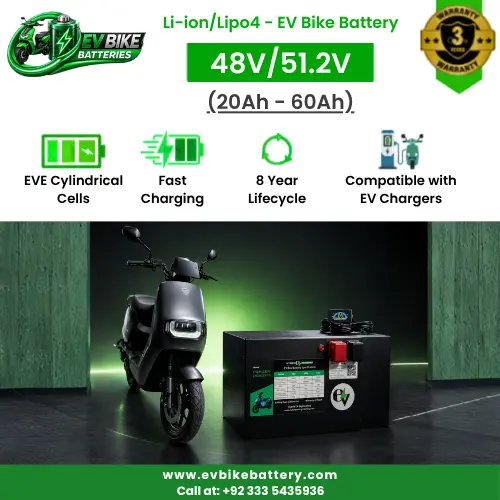
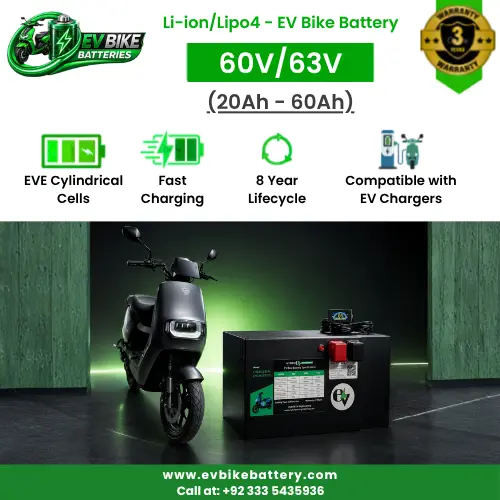
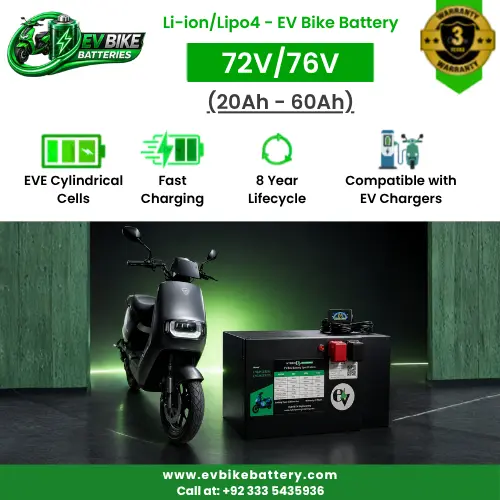
A healthy 48V pack should read around 54.6V fully charged, a 60V pack around 67.2V, and a 72V pack around 84V. These are typical for lithium-ion. LiFePO4 packs read slightly lower. If your fully charged voltage is well below these numbers, the pack may be unbalanced or aging.
Also check the voltage after riding a few kilometres. It should stay close to the nominal voltage. A sharp drop indicates high internal resistance or weak cells.
| Nominal Voltage | Fully Charged (Li-ion) | Fully Charged (LiFePO4) | Healthy Under Load |
|---|---|---|---|
| 48V | 54.6V | 58.4V | Above 48V |
| 60V | 67.2V | 73V | Above 60V |
| 72V | 84V | 87.6V | Above 72V |
How to test e bike battery with multimeter safely
To test e bike battery with a multimeter, set it to DC voltage, connect the probes to the battery terminals, and read the voltage with the bike off and then with the throttle slightly open. Always wear insulated gloves and work in a dry area.
Follow these steps:
Never short the probes or touch them together. If you are not confident, ask a technician. A wrong move can damage the BMS or cause a spark.
How does range drop tell you the battery is dying?
Range drop is the most reliable sign of battery aging. If your daily commute used to take one charge and now takes two, the capacity has fallen. Compare the distance you cover now with the distance when the battery was new.
For example, a 48V 20Ah pack might have given you 50 km when new. If you now get 30 km on the same route, the capacity has dropped significantly. This is normal after many charge cycles, but a sudden drop means a problem.
Keep a simple log: date, distance ridden, and voltage after the ride. Over a month, you will see the trend. If the range falls by more than a third, plan for a replacement or a professional check.
When is a battery worth repairing instead of replacing?
A battery is worth repairing if the problem is a loose connection, a faulty BMS, or a single weak cell. If the whole pack is aged and range is consistently poor, replacement is the better choice.
Signs repair may work: the voltage is normal but the bike cuts out over bumps (loose wiring), the charger never turns green (BMS issue), or one cell group reads much lower than others (balancing or cell replacement).
Signs replacement is needed: the pack is several years old, range is half of what it was, and the voltage sags badly under load. In that case, a new pack with fresh cells will be more reliable and cost-effective.
How does EV Bike Battery inspect and load test a pack?
At EV Bike Battery, we inspect and load test your pack in our I-9 Islamabad workshop. We check voltage, capacity, BMS behaviour, and wiring. Then we give you a clear answer: repair or replace.
Our inspection includes a full charge and discharge test to measure actual capacity, a check of the BMS for balancing and protection, and a visual inspection of cells and connections. We also test the charger. You get a written report and honest advice.
If replacement is needed, we build custom lithium packs with new EVE cells and a smart BMS. Every pack is load tested before handover. We offer a 3-year warranty and free fitting at our workshop.
What to do if your battery fails the health check
If your battery fails the health check, do not panic. First, confirm the voltage and range numbers. Then decide whether to repair or replace. If you are unsure, get a professional inspection.
If you need a new pack, choose the right voltage and capacity for your bike. Match the voltage to your controller. Pick capacity based on your daily range. For example, a 48V 20Ah pack suits short commutes, while a 60V 30Ah pack gives more range for delivery riders.
At EV Bike Battery, we build packs from 48V to 72V and 20Ah to 60Ah. Prices start from Rs 56,000 for a 48V 20Ah pack. Send your bike model on WhatsApp and we confirm the right voltage before you book.
Not sure if your battery is failing?
Send us a photo of your battery label and your bike model on WhatsApp. We will tell you what voltage and capacity you need, and whether a repair or replacement makes sense.
Frequently Asked Questions
How to test e bike battery with multimeter?
Set your multimeter to DC voltage. With the bike off, touch the red probe to the positive terminal and the black probe to the negative terminal. Read the voltage. Then turn the bike on and open the throttle slightly to see how much the voltage drops under load. A healthy pack holds its voltage well.
How to charge e bike battery?
Use the charger that came with your e bike. Plug the charger into the battery first, then into the wall socket. Charge in a cool, dry place. Avoid charging immediately after a long ride; let the pack cool for a while. Do not leave the charger connected for days after the light turns green.
How much is battery for electric bike?
In Pakistan, a 48V 20Ah lithium battery starts from Rs 56,000. A 60V 20Ah pack starts from Rs 67,000, and a 72V 20Ah pack from Rs 79,000. Larger capacities cost more. Prices are confirmed when you book.
What voltage is an e bike battery?
Common e bike battery voltages are 48V, 60V, and 72V. The voltage must match your bike’s controller. A 48V bike takes a 48V pack, a 60V bike takes a 60V pack, and a 72V bike takes a 72V pack. Some controllers allow slightly higher voltages like 51.2V or 63V.
Which EV bike battery voltage and Ah should I choose for my electric bike in Pakistan?
Choose the voltage that matches your bike’s controller. For capacity, estimate your daily round trip. A 20Ah pack suits short commutes up to about 30-40 km. For longer delivery routes, go for 30Ah or 40Ah. A 60Ah pack is for very long daily distances. Ask us on WhatsApp for a recommendation based on your bike model.
How much does an EV bike battery cost in Pakistan?
Prices start from Rs 56,000 for a 48V 20Ah lithium pack. A 60V 20Ah pack is from Rs 67,000, and a 72V 20Ah pack from Rs 79,000. Larger capacities are quoted on booking. All packs come with a 3-year warranty and free fitting at our Islamabad workshop.
Final Thoughts
The short version:
- Check range, voltage, and charger behaviour to spot a dying battery early.
- Use a multimeter to measure resting and under-load voltage safely.
- A healthy 48V pack reads about 54.6V fully charged; 60V about 67.2V; 72V about 84V.
- If range drops by a third or more, plan for a replacement.
- Repair only makes sense for wiring or BMS issues, not for aged cells.
If your battery fails these tests, a new lithium pack from EV Bike Battery will get you back on the road with confidence. For more on battery life, read How Long Does an Electric Bike Battery Last?.
Get Your Battery Checked